Ethical Genealogy
A guide to responsible research, with practical considerations for the people whose lives appear in your family history.
Download the Guide ↓
A thoughtful approach to family history
Family history brings together records, questions, and real lives. Our guides and practical research tools help you keep your discoveries organized and approach the stories you uncover with care.
From our research desk to yours
Start with our free Ethical Genealogy collection. Thoughtful guidance for respecting privacy, seeking consent, and sharing family stories responsibly. No purchase or email signup required.
A guide to responsible research, with practical considerations for the people whose lives appear in your family history.
Download the Guide ↓Keep the key reminders close at hand while you research, contact relatives, and prepare to share your findings.
Download the Quick Reference ↓Keep a record of contact and consent when your research involves living people.
Download the Consent Log ↓For the fillable log, download the PDF and open it in Adobe Acrobat Reader. Use Save or Save As to retain an editable copy. You can also print a blank copy to fill by hand.
Thoughtful guidance for your next research question
Family history research brings different questions at different stages. Our two companion collections pair teaching guides with reusable tools, helping you organize what you know and examine the questions that need a closer look.
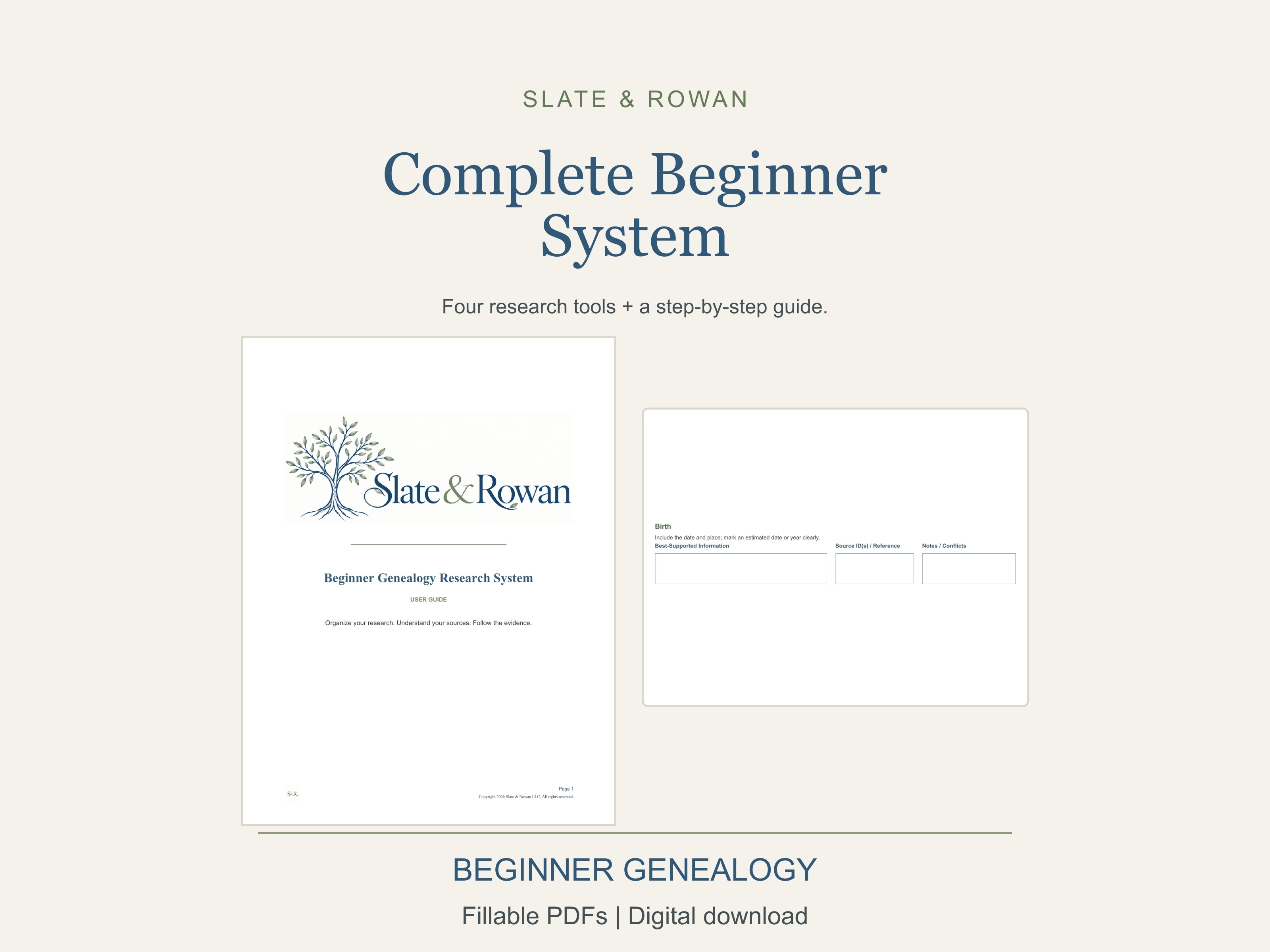
Beginner Genealogy
Start with one person and give your discoveries a place to belong. The Beginner System helps you organize people, examine sources, track record searches, and keep research contacts close to your notes. A teaching guide and worked example show how the four research tools fit together.
Includes: User Guide, Person Profile, Guided Source Analysis, Evidence Tracker, and Research Contacts & Repositories.
Explore the Beginner System ↗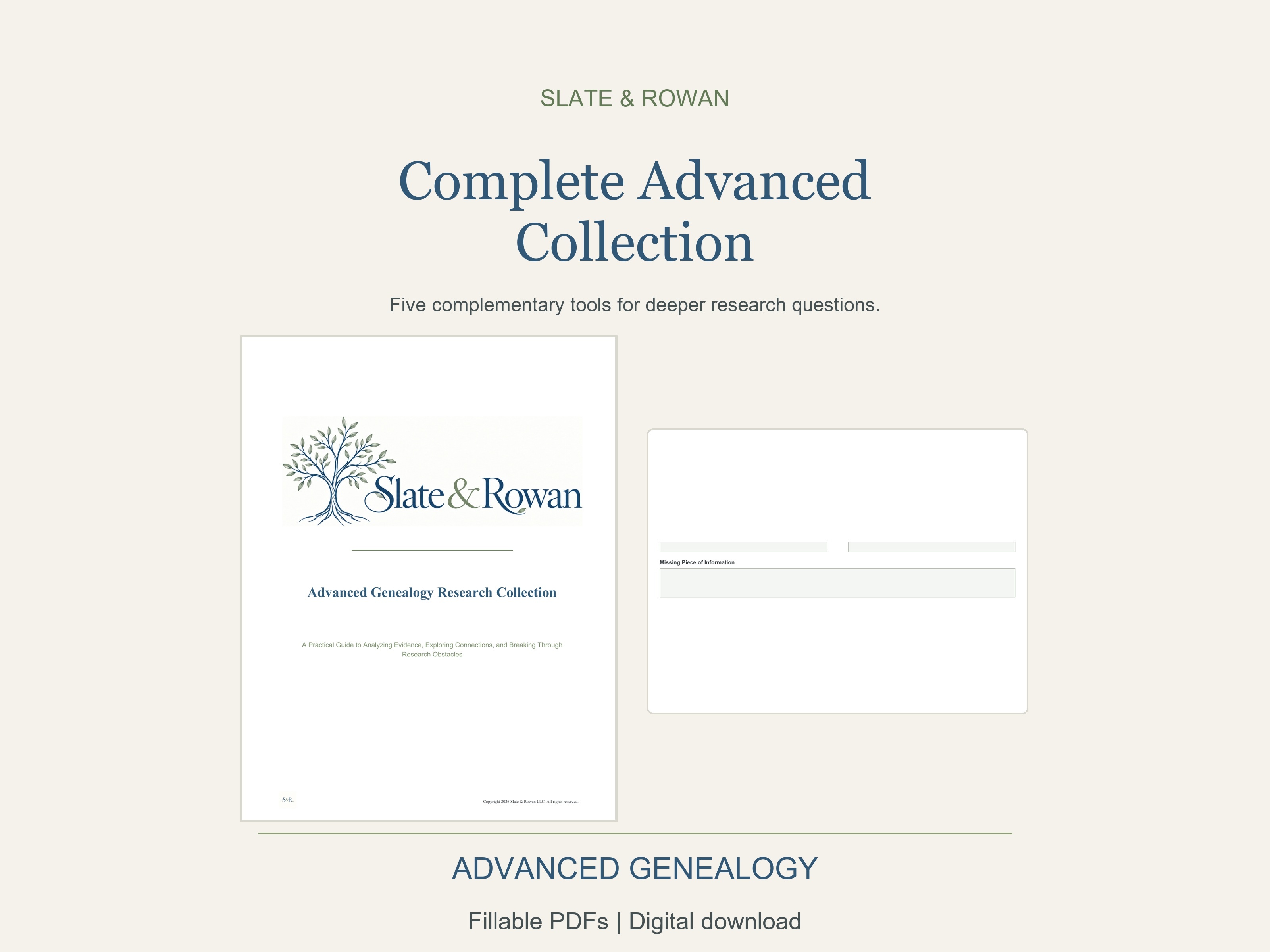
Advanced Genealogy
When records disagree, names repeat, or a trail becomes difficult to follow, a focused question can help you decide what to investigate next. The Advanced Collection brings together tools for brick walls, conflicting evidence, identity, migration, and FAN research: friends, associates, and neighbors. A connected fictional investigation shows how the methods can work together while keeping uncertainty visible.
Includes: A 24-page collection guide and nine fillable worksheet PDFs, delivered as one guide PDF and one ZIP of worksheets. The worksheets provide 14 working pages and include both Identity orientations.
Explore the Advanced Collection ↗Choose either collection independently or use them together. Each collection is sold separately, and individual tools are also available in our Etsy shop. Downloadable PDFs. Nothing will be shipped.
01 | Stay Curious
A record is a starting point. Look closely at what it says, what it leaves out, and where it might lead next.
02 | Keep Connections
Keep your sources close to your notes so you can return to the evidence as your understanding grows.
03 | Research With Care
Respect privacy and consent as you explore, preserve, and share family stories.
No. The collections can be used independently. Beginner focuses on organizing people, sources, searches, and contacts. Advanced focuses on working through more complex evidence questions. Choose the collection that fits your current research, or use them together.
Yes. All three PDFs above are free to download, with no purchase or email signup required.
The Research Contact & Consent Log and our beginner working forms are fillable PDFs. Download them and use Adobe Acrobat Reader to type and save. You can also print blank forms to complete by hand. The guide and quick reference are reading resources.
Use Save or Save As in Adobe Acrobat Reader. Keep a fresh blank master to reuse. Avoid Print to PDF when you want to preserve editable fields.
With your permission, Google Analytics uses cookies to measure visits, PDF-link clicks, and links to our Etsy shop. You can use every resource without analytics. Privacy details.